Composition part 2: the subject and 7 standards of beauty
Further reading
- Composition part 1: the photographer’s “8 brushes”
- Composition part 3: foreground, 13 leading lines and 5 standards for drawing attention
- Composition part 4: basic ratios – the golden ratio
- Composition part 5: the 1/2 ratio, symmetry and balance
What is a subject?
For a photo to be easy to take in, it must have a clear theme or message. For that, the photo needs a subject, one main element. In a landscape photo, that is an object or a group of objects that stands out enough to draw attention to the photo.
Without a subject that stands out, everything in the photo sinks into the same flat, even level. Nothing leaves a strong impression on the viewer, and the photo becomes less appealing and can even turn boring.
The subject and beauty
A beautiful photo is a frame that holds beauty, and that beauty depends largely on one main element: the subject of the photo. The subject can be something with an interesting, unusual or unique shape. Combine it with the standards that make it stand out and with the other supporting elements, and you have a striking photo.
Remember one thing: “Your photo is only as beautiful as the ‘beauty’ you choose to bring into your camera’s frame”. Therefore, the first step in making a fine photo is to find that “beauty” and then frame it in your camera, starting with the subject.
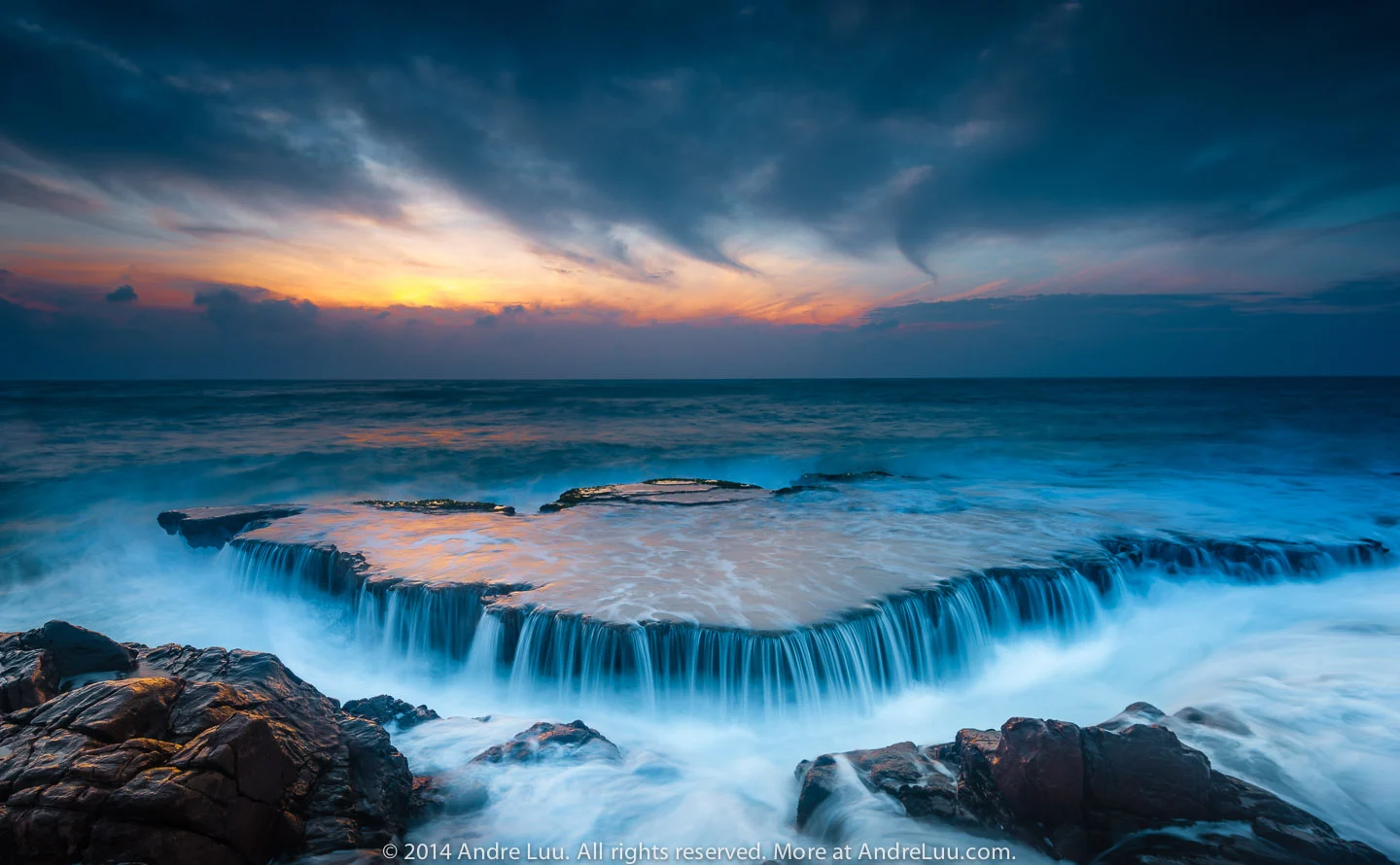
No subject – the photo is only a backdrop
Taken one by one, the details in this photo are truly lovely: a sky with rare streaking rays, a blue sea and a rather attractive rocky shore. As a whole, though, the photo is very ordinary. It is empty, nothing stands out, and it therefore conveys no theme or message.

A single subject
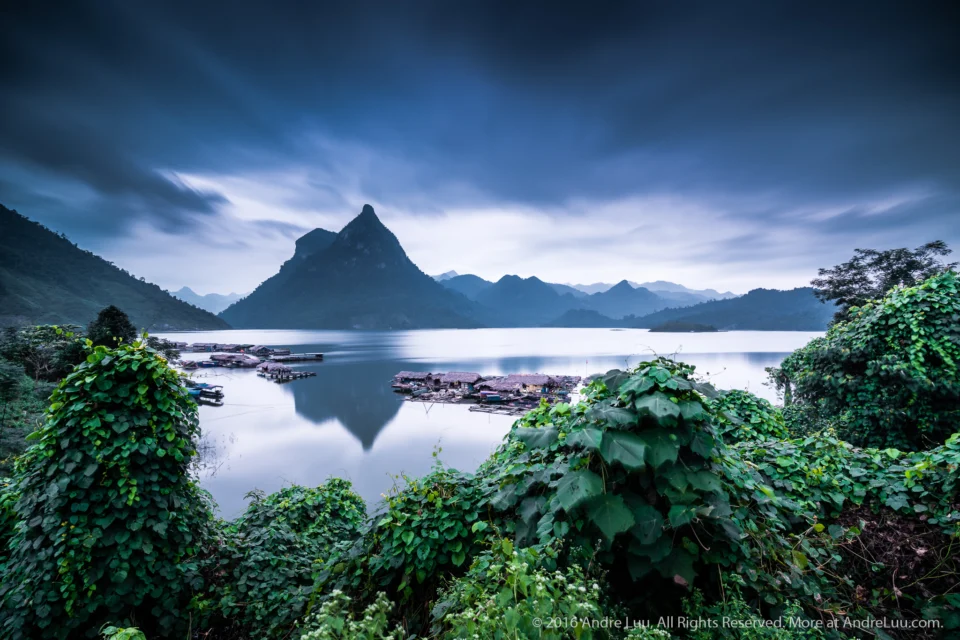
The subject can be one simple object that stands out.

A group subject
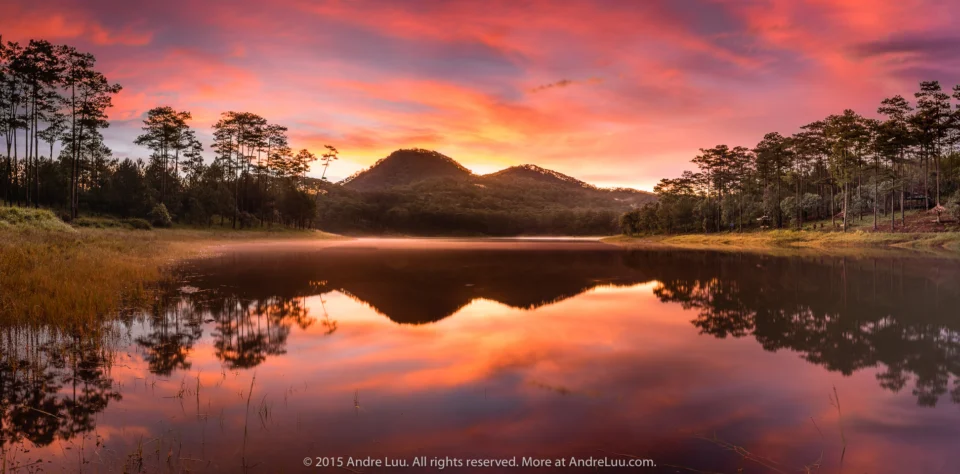
The subject can be a group of objects that stands out, all of the same kind, or fairly similar or exactly alike in shape.

5 kinds of subject – what you can look for when you go out to photograph
When you scout a location to decide what to photograph, these are the subjects that are easy to find in nature. Combined with the standards in the next section, they will help you choose an eye-catching subject for your photo.
- Rocks of all kinds (mountain rock, sea rock, coral, cracks in the rock …)
- Sand (sand dunes, sand ripples …)
- Plants of all kinds (with leaves, without leaves, living, dead, moss and algae, grass …)
- Water, water surfaces with a shape (pools, water channels, waves, surging water …)
- Clouds with a shape
7 standards that help make a beautiful subject
1. Separation
When I scout for a good subject, the first standard I look for is separation. A separated subject is very easy to move around, and it is easy to line up the glowing clouds of sunrise or sunset behind it as the background. Framing the foreground and the leading lines becomes more flexible too. A separated subject gives the photo a simple composition, with no other elements tangling it up, and therefore makes a pleasing composition very easy to create.
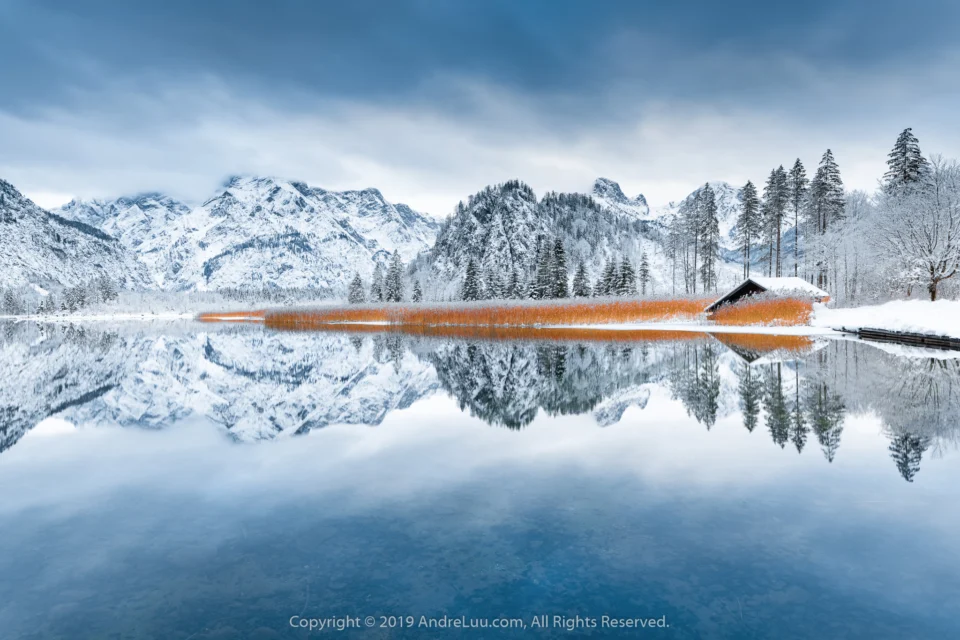
A row of trees as a separated subject – open and graceful

A row of trees caught on 2 edges of the frame – cluttered and ugly

2. Light and dark tonal contrast
As with separation, the subject needs a tone, light or dark, that contrasts with the other details in the photo. Only then can it stand out against the backdrop of the photo.
To avoid confusion over art terms: white tones (gray-white to white) and black tones (gray-black to black) are not colors but tones. You can recognize the tone of other colors by closing one eye and bringing the scene in front of you into focus. When you analyze the tones of a scene with many different colors this way, it is very easy to see which parts are dark and which are light.
Light on dark The subject is the bright pools, which stand out against the dark rock.

Dark on light The subject is the dark rock, which stands out against the bright water and sky.

3. Bright and dark color contrast
As with tone, bright colors (usually light in tone, such as green, orange, red, pink, yellow …) stand out well against dark colors (usually dark in tone, such as blue, purple, dark red, brown …).
Green on gray-brown The subject is a cluster of fresh green plants that stands out against the gray-brown rock.

Black on pink and purple The subject is a dead tree. It is backlit; therefore, it turns black and stands out against the pink, purple and pale blue of the sky and water.

4. Rough and smooth contrast
A contrast in the subject’s surface or texture, rough against smooth, works very well when it is combined with the contrast in tone or color described above. Without that, the subject will not stand out as strongly.
Rough rock on smooth water The subject is the rough, mossy rock, which stands out against water that a long exposure has made as smooth as silk.

Smooth pools on rough moss The subject is the pools, smoothed by a long exposure, which stand out against the rough patch of moss.

5. Sharp and blurred contrast
Like rough and smooth contrast, sharp and blurred contrast needs to be combined with a contrast in tone or color for the subject to stand out at its best. Usually I want the subject sharp and the backdrop blurred so that the subject stands out. The blur can come from nature, such as fog, or from optics, such as a shallow depth of field that creates bokeh and blurs the background.
Sharp tree on blurred fog The subject is the sharp tree branch, which stands out against the hazy fog.

Sharp tree on blurred mountains The subject is the leafless tree, which stands out against the blurred, out-of-focus mountain range. The mountains are blurred because a shallow depth of field turns them into bokeh.

6. Size contrast
Size can also make the subject stand out when there is a big difference in size between it and the other elements. The subject is usually the large one that stands out, but it can also be the smallest one, which draws special attention for that reason. In many cases you can control the size difference directly through how near or far you place the camera, or by using a wide lens.
Big tree with small trees The subject is the tree that looks big because it is near. It stands out beside the trees that look smaller because they are far away.

Small tree with big mountains The subject is the small tree, which stands out beside the big mountain peaks around it.

7. Shape contrast
Besides the standards and qualities above, the subject can also contrast in shape. In general, in a scene where almost everything has the same kind of shape, the one unusual shape makes a good subject. It contrasts with the uniform backdrop formed by the other elements and stands out against it.
An unusual shape – the pincer ant A subject with a special shape that resembles some object or animal also stands out.

A pointed shape – the highest peak In a mountain range of even, gently tapering peaks, the sharpest and highest peak always draws the most attention.

An ordered shape In a messy scene, a cluster of details that nature has arranged in order makes a good subject, because it stands out from the other, unordered details. However, you have to look at that cluster of objects from many different angles before you can see the order, because most of these orders show from exactly one viewpoint.

Checklist – what to check when choosing a beautiful angle
Before you settle on an angle and frame it in the viewfinder to photograph it, check whether the frame has a subject and whether that subject meets the standards described above. At a minimum, the subject should be separated and meet one of the contrast standards.
- Separation
- Light and dark tonal contrast
- Bright and dark color contrast
- Rough and smooth contrast
- Sharp and blurred contrast
- Size contrast
- Shape contrast
Further reading
This article is for general education and is provided "as is". Photography outdoors carries risk: you are responsible for your own safety, gear and decisions. Disclaimer
Fine art prints
Signed, made to order on archival fine art paper, with the facts behind every photograph.
See the prints
Photo trips with Andre
Small groups to Lofoten, Iceland and Vietnam, at the right season and the right hour.
Ask about the next trips